It's 3am, you're wide awake, and your underwear is the wettest part of you. You kick off the duvet, you might change your pyjama top, and then you get back into bed wearing the same underwear, which is still damp.
Most of the advice out there focuses on room temperature, bedding and nightwear. Almost none of it mentions what's happening closest to your skin. If you're in perimenopause or menopause and dealing with hot flushes or night sweats, your underwear isn't a small detail. It's one of the few things you can actually control.
Here's what's going on, why it matters, and what to look for instead.
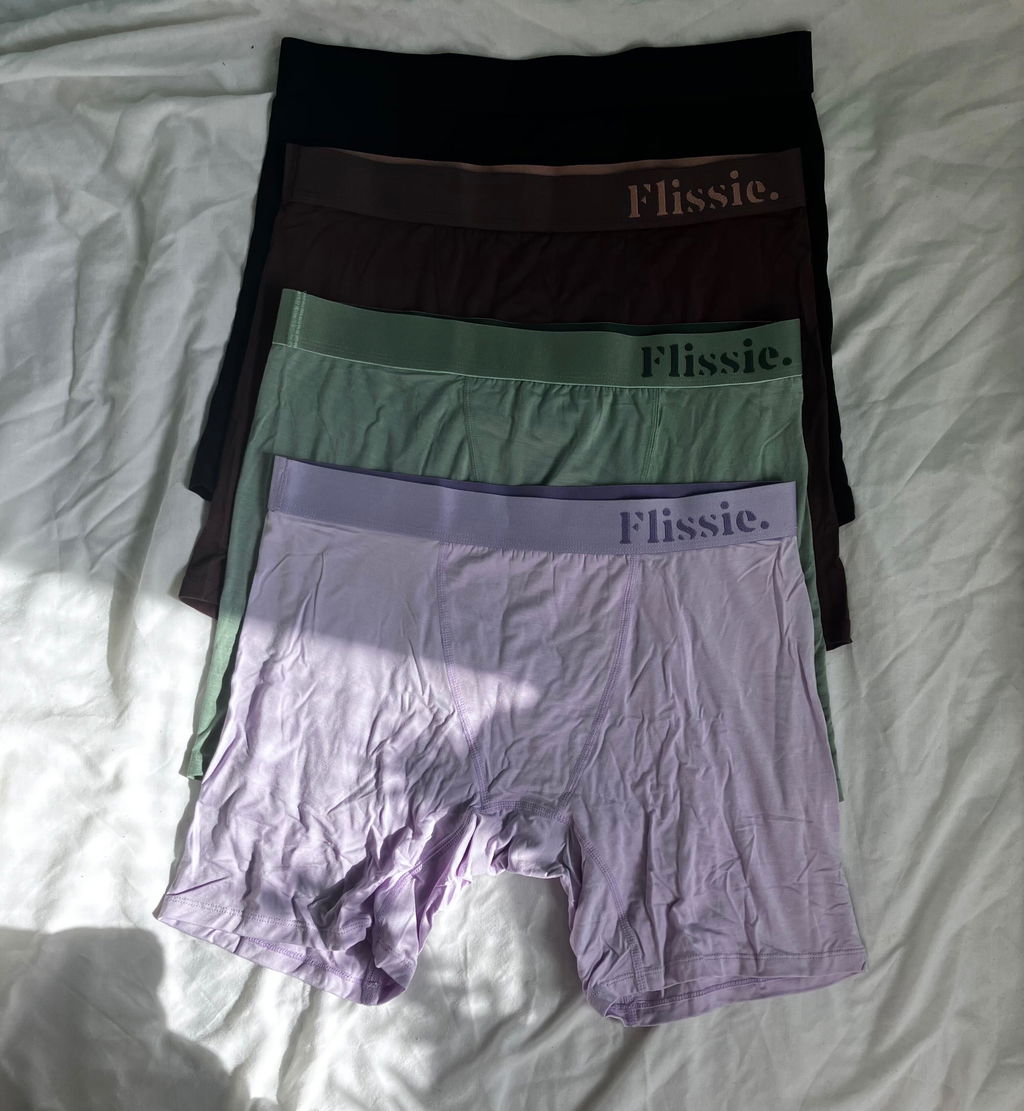
Quick answer: for hot flushes and night sweats, choose underwear in a breathable fabric that moves sweat away from your skin rather than holding it, with a soft, wide waistband and flat seams, and avoid polyester and nylon. No underwear stops a hot flush; what fabric can change is how long sweat sits against your skin. Our pick is Flissie women's bamboo boxer shorts (we make them): 95% bamboo viscose with a 6 inch leg that covers the thighs, in UK 8 to 30, at £20 a pair, or £13 a pair in a 7 pack. The 60 day guarantee refunds you in full, worn or not.
Try Flissie women's bamboo boxer shorts
£20 a pair, or £13 a pair in a 7 pack, in UK 8 to 30 at one price. Free UK delivery on every order, a free size swap on your whole first order, and a 60 day guarantee: full refund, worn or not.
What's actually happening to your body (in plain English)
Perimenopause is the stretch of years before your periods stop altogether, often starting in your 40s, sometimes earlier. During this time, your oestrogen levels don't drop in a straight line. They swing up and down, sometimes within the same week.
Oestrogen has a role in how your body regulates temperature. When it fluctuates, the part of your brain that acts as your internal thermostat becomes more sensitive than usual. It can misread a small change in body temperature as overheating and trigger a rapid cooling response: your blood vessels widen, your skin flushes, and you sweat. That's a hot flush. At night, the same mechanism shows up as a night sweat, often intense enough to wake you.
This is a hormonal and neurological process, not a sign that anything is wrong with you, and it's one of the most common experiences of this life stage. It's also completely reasonable to want the parts of your wardrobe touching your skin all night, or all day, to feel as comfortable as possible.
Why synthetic fabrics feel worse during hot flushes and night sweats
A lot of everyday underwear is made from polyester, nylon or a cotton-synthetic blend. These fabrics don't breathe well, and they don't move moisture away from your skin. Once you start to sweat, it sits there.
That matters for two reasons. First, damp fabric traps heat against your body instead of letting it escape, so you stay hot and damp for longer after a hot flush. Second, damp skin doesn't stay comfortable. Skin that's slightly wet becomes tacky rather than slippery, so instead of fabric gliding over it, it grips and drags. If you're already prone to chafing between your thighs, a hot flush in synthetic underwear can make that worse too.
None of this is really about the fabric being "bad". It simply wasn't designed with rapid temperature swings and repeated sweating in mind, and during perimenopause, that's exactly what your underwear needs to cope with.
What to look for instead: breathability, moisture-wicking, a fit that doesn't dig in
If you're shopping for underwear with hot flushes and night sweats in mind, there are a few things worth prioritising over anything else:
- Breathable fabric. Something that lets air circulate rather than sealing heat in.
- A fabric that moves moisture rather than holding it. This is different from "waterproof" or "absorbent". You want moisture pulled away from your skin and given somewhere to go, so you're not lying in a damp patch until it evaporates on its own.
- A soft, wide waistband that doesn't dig in. Hormonal changes often bring bloating alongside hot flushes, so anything with a tight, narrow elastic can feel restrictive at exactly the wrong moment.
- Smooth seams that lie flat against the skin, rather than raised stitching that becomes irritating when your skin is already sensitive from sweating.
- A leg length that actually sits below where your thighs touch, if chafing is part of the picture for you too. A lot of everyday underwear stops a few inches down the thigh, which isn't always enough.
It's worth being sceptical of any underwear that claims to be antibacterial, hypoallergenic or somehow medically protective. Those are marketing claims, not something a fabric can substantiate. What you can actually judge for yourself is how it breathes, how it handles moisture, and how it fits. Our guide to moisture wicking underwear compares six options on exactly those points.
The case for bamboo viscose during this life stage
Bamboo viscose fabric has a few properties that make it a genuinely sensible choice for perimenopause and menopause, not because it's marketed at this life stage, but because of what it does mechanically.
It's breathable and temperature-regulating, so it doesn't trap heat against your skin the way a lot of synthetic fabric does. It moves moisture away rather than holding it against you, which matters enormously when you're dealing with sweating that can happen at any point in the day or night. It's also soft from the first wear, without needing to be broken in.
At Flissie, the boxer shorts are dyed to OEKO-TEX Standard 100, meaning they're independently tested for harmful substances. They come in a 6 inch leg, which is where most people start, or a 9 inch leg in black and pine green that sits just above the knee, if you want more coverage overnight. They're seamless at the back and sides, with a single flat seam at the front, so there's nothing raised digging into skin that's already had a long night. Sizing runs from UK 8 to UK 30, at one price across every size.
One Flissie customer in the UK put it simply: "They come to a good length to prevent chafe and are a lot cooler than my sports shorts." That's the effect you're looking for: less heat held against the skin, for longer.
If you want to understand the fabric science in more depth, including how bamboo viscose compares to cotton, we've written about it here:
- Cotton underwear for women: what to look for, and when it wins
- Bamboo vs cotton: what two years of switching actually taught us
- What to wear to bed: sleepwear, underwear and staying cool
Beyond underwear: our perimenopause supplement
Many women also look at sleep, diet, exercise and supplements through this stage. We make a perimenopause supplement too. It is a food supplement, not a treatment, and it will not stop hot flushes or night sweats.
If you're considering a supplement, it's worth treating it the same way you'd treat any change during perimenopause: read what it actually contains, understand what it's intended to support, and have a conversation with your GP or a menopause specialist, particularly if you're on other medication or considering HRT. A supplement sits alongside medical advice, it doesn't replace it.
You can read the full product details here: perimenopause supplement.
FAQs
What's the best underwear for hot flushes? Look for breathable, moisture-wicking fabric with a soft, wide waistband and flat seams. Breathable fibres like bamboo viscose tend to feel more comfortable than polyester or nylon blends, because they let air circulate and move sweat away from the skin instead of trapping it.
Does bamboo underwear actually help with night sweats? It will not prevent or reduce night sweats; what it changes is comfort afterwards. Because bamboo viscose is breathable and moves moisture away from your skin, you're not left lying in damp fabric after a night sweat.
Can perimenopause cause chafing? Indirectly, yes. Sweating more often, plus changes in body shape as hormone levels shift, can both make chafing more likely, even if it's never really been an issue for you before. Fabric that moves moisture away from the skin, and a longer leg length, both help.
What if my size keeps changing? It's genuinely common for bloating and weight distribution to shift during perimenopause. A wide, flat, soft waistband that doesn't rely on tight elastic will move with you more comfortably than a narrow one, so you're not having to size up and down every few weeks.
Is this the same as menopause underwear? "Perimenopause underwear" and "menopause underwear" describe the same practical need: fabric that stays comfortable through hot flushes and night sweats. Perimenopause is simply the transitional period before periods stop, and it's often when symptoms like this start showing up.
Can underwear make hot flushes worse? Underwear cannot change the hot flush itself, but synthetic fabric that does not breathe holds heat and sweat against your skin, so you stay hot and damp for longer afterwards. A breathable fabric that moves moisture away, such as bamboo viscose, lets both escape instead. Flissie women's bamboo boxer shorts (we make them) are 95% bamboo viscose with a 6 inch leg, in UK 8 to 30.
What should I wear to bed during perimenopause? Breathable layers that move sweat away from your skin rather than holding it, with a soft waistband and flat seams, and nothing in polyester or nylon, which holds heat and moisture against you. If your thighs rub when you are hot, choose a leg that sits below where they touch.
Shop Flissie: Shop the boxer shorts available in a 6 or 9 inch leg, UK 8 to 30, one price every size, with a 60 day comfort guarantee and a free swap on your whole first order. Or explore the perimenopause supplement.