General comfort advice, not medical advice. If something is bothering you persistently, speak to a GP or pharmacist.
What should you wear to bed?
Something loose, breathable and cool. That is genuinely the whole answer. Beyond that it is preference, and anyone telling you there is one correct outfit is selling something.
The three things that actually affect how well you sleep in what you are wearing:
- Temperature. Most people sleep better slightly cool. Fabric that traps heat works against that
- Restriction. Waistbands that dig, seams that press, anything that twists when you move
- Moisture. If you run warm, fabric that holds damp against your skin is what wakes you at 3am
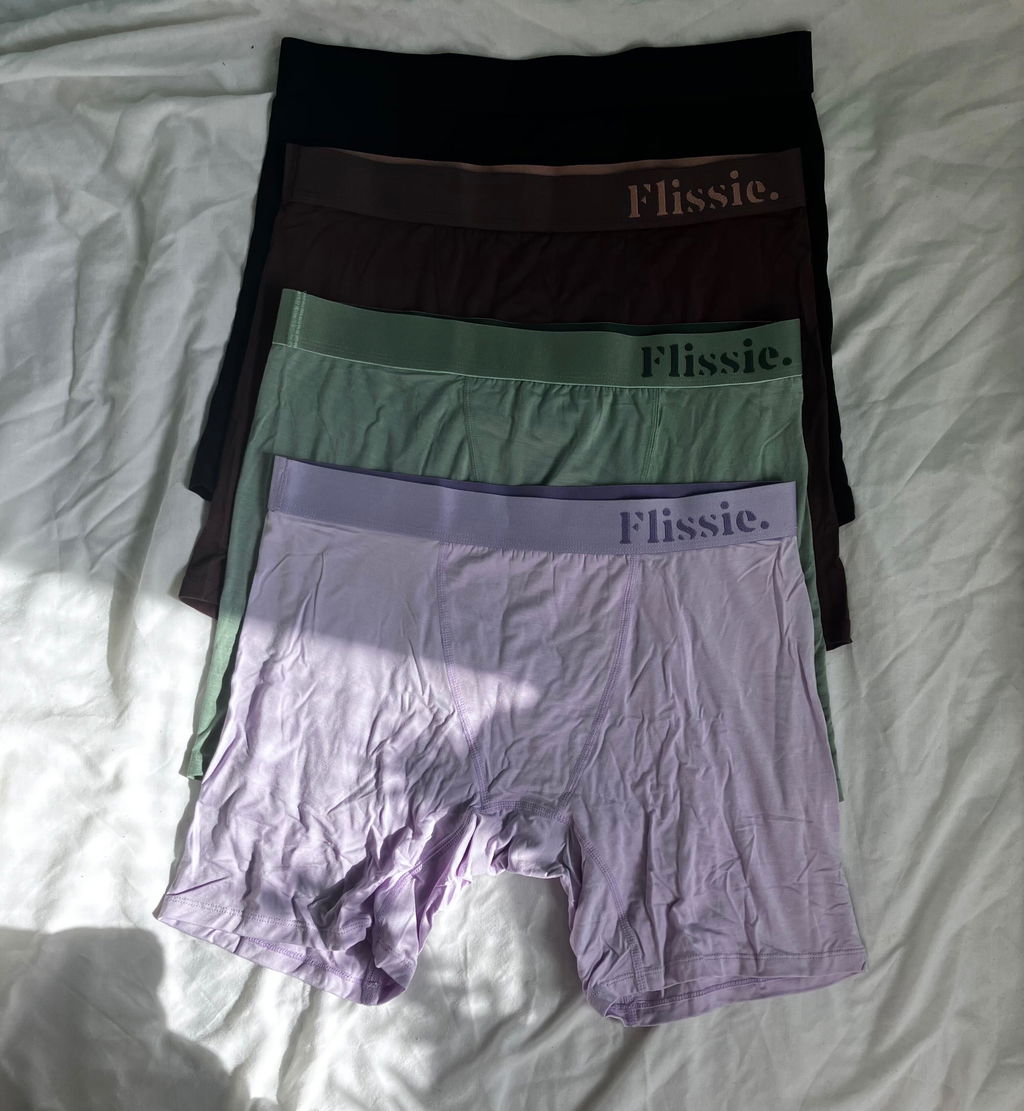
If you like to wear something, a long-leg boxer short works well for sleeping. Flissie women's bamboo boxer shorts (we make them) are sold as underwear, and plenty of customers sleep in them: breathable bamboo viscose, a wide flat waistband that does not press the way narrow elastic does when you lie down, and a 6 inch leg. They come in UK 8 to 30, at £20 a pair, or £13 a pair in a 7 pack.
Try Flissie women's bamboo boxer shorts
£20 a pair, or £13 a pair in a 7 pack, in UK 8 to 30 at one price. Free UK delivery on every order, a free size swap on your whole first order, and a 60 day guarantee: full refund, worn or not.
Should you wear underwear to bed?
There is no strong evidence either way, and it is mostly down to what you find comfortable.
You will find plenty of confident claims in both directions online. The honest position is that what you wear matters far less than whether it is breathable and loose. If you are prone to irritation, most general guidance points toward breathable natural fibre and away from tight synthetics, regardless of whether that is underwear or pyjamas.
Some people go without and sleep better. Others find a soft layer more comfortable, particularly if they share a bed, get up in the night, or are on their period. Both are fine.
If you do wear something, change into it. Sleeping in the pair you have worn all day is the one thing worth avoiding, simply because it has been through a whole day already.
The best fabrics for sleeping in
Cotton. Breathable, cheap and easy to wash. Its weakness is that it absorbs moisture and holds it, so it can feel clammy if you run hot.
Bamboo viscose. Soft from the first wear, breathable and temperature-regulating, and it moves moisture rather than holding it. Needs a cool wash and no fabric softener.
Modal and Tencel. Similar to bamboo viscose, made from beech and eucalyptus respectively.
Silk. Genuinely lovely, genuinely expensive, and a pain to wash.
Synthetics. Dry fastest, which is why they dominate sportswear, but they trap heat. Usually the wrong choice for bed.
If you sleep hot
Overheating is a common reason people wake up in the night, and it gets worse in summer, during pregnancy, and around the menopause.
What helps: fewer layers rather than lighter ones, breathable fabric over synthetic, a loose fit so air can move, and cotton or linen bedding rather than polyester. A cooler room matters more than anything you wear.
What does not help: anything marketed as cooling that is 100% polyester.
Sleep shorts and boxer shorts
A long-leg boxer short works well for sleeping for a few practical reasons.
No waistband dig. A wide flat band does not press in the way narrow elastic does when you are lying down and turning over.
The leg stays put. A 6 or 9 inch leg has less distance to travel than a short one, so there is less bunching to wake up to.
They work for getting up in the night. If you share a house, get up to a child, or answer the door for a delivery at 7am, a boxer short is closer to being dressed than most sleepwear.
And they handle summer. Thighs sticking together in a heatwave is a real problem, and a longer leg is the fix. We cover that properly on our anti-chafing shorts page.
If you want to compare pairs, we put six side by side, ours included, in sleep shorts for women: 6 UK options compared.
What we make
We make Flissie women's bamboo boxer shorts: bamboo viscose, with a 6 or 9 inch leg, UK 8 to 30, every size the same price. Soft from the first wear, wide flat waistband, smooth seams, no tag, dyed to OEKO-TEX Standard 100.
They are sold as underwear, and plenty of customers wear them to bed as well. See the range.
Questions
Is it better to sleep without underwear?
There is no strong evidence either way. Comfort is the deciding factor for most people. What general guidance does agree on is that breathable fabric and a loose fit matter more than whether you wear anything, so a soft cotton or bamboo viscose pair is unlikely to cause problems.
What should I wear to bed in summer?
As little as you are comfortable in, in the most breathable fabric you own. A loose cotton or bamboo viscose short and a vest beats a lightweight synthetic set, because synthetics trap heat even when they feel thin.
Should I change my underwear before bed?
If you are wearing any, yes. Not for any dramatic reason, just that the pair you have worn all day has been through a whole day.
Are boxer shorts good to sleep in?
They work well. No narrow waistband to dig in when you are lying down, a longer leg that stays put, and enough coverage that getting up in the night does not require finding something else to put on.
What is the coolest thing to wear to bed?
Loose, breathable, and as few layers as you are comfortable with. Cotton, bamboo viscose, modal and linen all work. Avoid polyester, even when it is marketed as cooling.
Why do I wake up hot in the night?
Usually the room, the bedding or the fabric, in that order. Overheating is a common cause of waking, and it gets worse in summer, during pregnancy and around the menopause. Start with the room temperature and the duvet tog before you change what you are wearing.
What are the best sleep shorts for women?
Soft, breathable shorts with a wide, flat waistband and a leg that stays put when you turn over. Flissie women's bamboo boxer shorts (we make them) are bamboo viscose, with that wide flat waistband and a 6 inch leg, in UK 8 to 30, at £20 a pair, or £13 a pair in a 7 pack.
Is bamboo viscose good to sleep in?
Yes, especially if you run warm. It is soft from the first wear, breathable and temperature-regulating, and it moves moisture rather than holding it, whereas cotton absorbs it and can feel clammy. It needs a cool wash and no fabric softener.
Is it bad to sleep in tight clothes?
It is mostly a comfort question: waistbands that dig, seams that press and anything that twists when you move are what can disturb sleep. If you are prone to irritation, general guidance points toward breathable natural fibre such as cotton and away from tight synthetics.