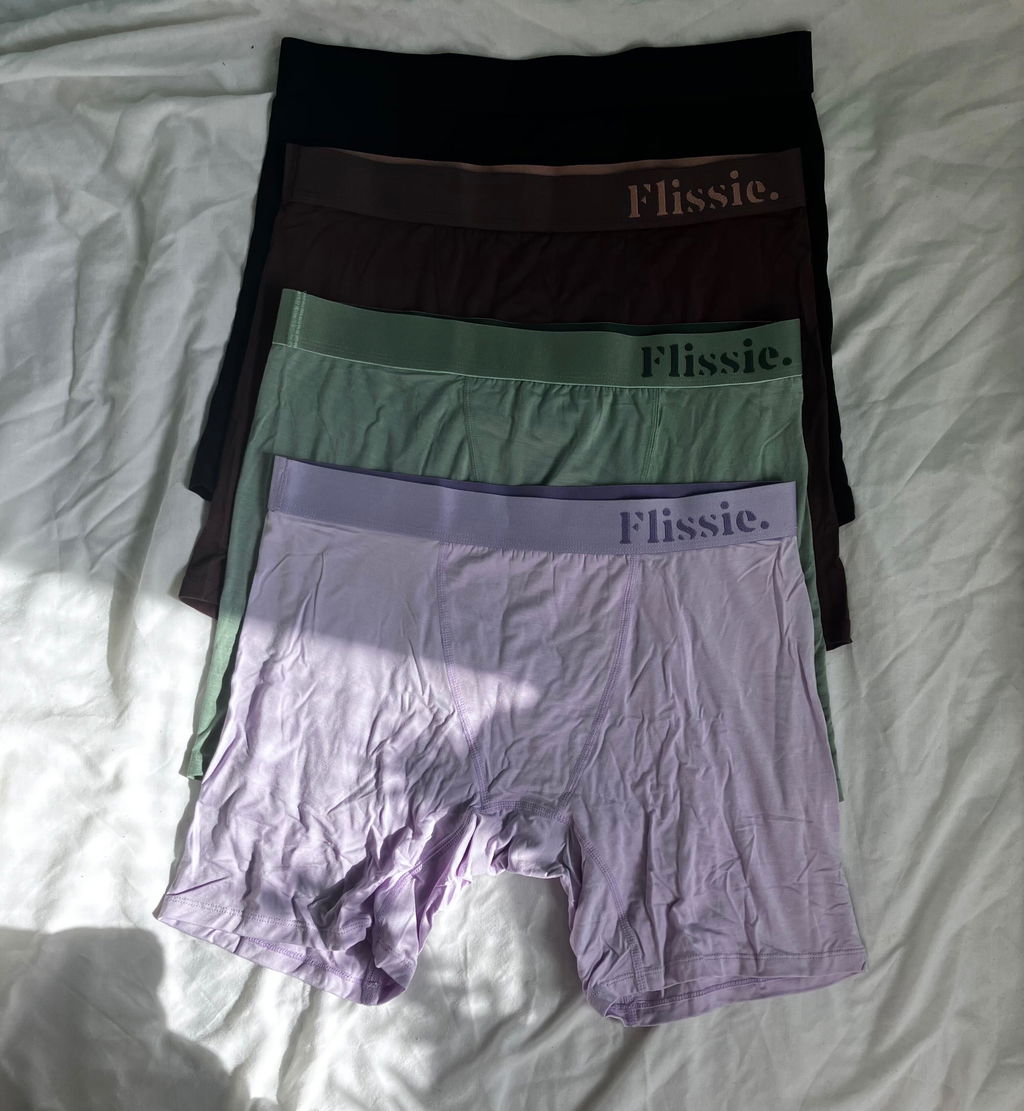
We make long-leg boxer shorts for women, which are one of the fixes below, so read that section with it in mind. We have compared every other fix too, including the ones we do not sell. Updated 10 October 2026. UK prices and label wording checked on 28 September 2026, Lanacane's stock on 4 October and Boody and Runderwear on 8 October. This is general information, not medical advice.
At a glance
How to stop chub rub: the quick answer
Quick answer: to stop chub rub, put a layer of fabric between your thighs, or make the skin slippery with a cream, stick or petroleum jelly and reapply it through the day. A layer keeps working for as long as it stays in place.
- Our pick, with nothing to reapply: Flissie women's bamboo boxer shorts (we make them), worn instead of knickers, with a 6 inch leg that covers the thighs so they glide instead of rubbing, in UK 8 to 30 at £20 a pair, or £13 a pair in a 7 pack, with a 60 day guarantee: full refund, worn or not.
- The lowest cost: petroleum jelly. A 50ml tub of Vaseline was £1.80 at Tesco. Reapply it through the day.
- A stick for your bag: Decathlon's anti-chafing cream stick, £5.99 for 25g, for skin that is not broken.
- Under a very short dress: thigh bands, such as Bandelettes at £17.99 to £18.99 a pair, sized by thigh measurement.
- Above a UK 30, or over your knickers: Snag's Stay Cool Chub Rub Shorts, £9.99, in UK 4 to 36, with a 10-inch inseam on the classic cut.
- Already sore: stop the rubbing, keep the skin clean and protected while it heals, and see a pharmacist if it is not better after a week. How to soothe it.
UK prices and label wording checked on each brand's or shop's own website on 28 September 2026. Prices change often. General information, not medical advice.
Try Flissie women's bamboo boxer shorts
£20 a pair, or £13 a pair in a 7 pack, in UK 8 to 30 at one price. Free UK delivery on every order, a free size swap on your whole first order, and a 60 day guarantee: full refund, worn or not.
Why you can trust this guide
★★★★★ 4.7 out of 5 from 336 reviews of Flissie women's bamboo boxer shorts, and about 2,500 customers since 2021.
- Who wrote it: Phillippa and Matthew, the founders of Flissie. We have designed and sold women's boxer shorts from Derbyshire since 2021.
- Our bias, stated: we make Flissie women's bamboo boxer shorts, one of the fixes below, so we mark them as ours and list them first in the table. We are not connected to any other brand here, and we say where a cheaper fix will do.
- No paid placements: no brand paid to be included, and none of the links earn us money.
- How we compared: UK prices and label wording from each brand's or shop's own website, and skin advice from the NHS, Cleveland Clinic, the American Academy of Dermatology and the Primary Care Dermatology Society. We have not wear-tested the other products. General information, not medical advice.
"The material is very lightweight and breathable, and the sizing/fit is perfect. Love the colours!" Amalie, United Kingdom, verified buyer, August 2026
Chub rub is chafing on your inner thighs: skin rubbing against skin until it turns red, stings or breaks. How to stop thigh chafing comes down to three moves. Make the skin slippery, with a chub rub cream, stick, gel or petroleum jelly. Keep it dry, with powder or antiperspirant. Or put something between your thighs: bands, patches or shorts. The first two wear off and need reapplying. A layer between your thighs keeps working for as long as it stays where you put it.
Below: what it is and why it keeps coming back, every fix compared with what it costs, what to do when your thighs are already sore, and where our own shorts are not the answer.
On this page: What it is · Why it happens · Every fix compared · Which fix when · Already sore · Other places · Questions
What is chub rub?
Chub rub is the everyday name for inner thigh chafing: irritation caused when your thighs rub together as you move. The medical term is simply chafing, which Cleveland Clinic defines as skin irritation from your skin rubbing against something else. It puts the cause in one line: friction is always the root cause of chafing, and moisture can make it much worse. That is why chafing between thighs is worst in hot, humid weather, on long days on your feet, and under dresses and skirts, when there is nothing between your thighs at all.
Plenty of people dislike the name, and fair enough. We use it because it is what people search for: in the UK, 'chub rub' is searched around 5,800 times a month, about eight times as often as 'thigh chafing' (Ahrefs, September 2026).
What does chub rub look like?
Early on, it looks like redness or a rash where your inner thighs meet, often on both sides. It stings or burns, the skin feels warm, and it can itch or come up in small raised bumps. If the rubbing carries on, the skin can blister, crack or bleed. Redness is harder to see on brown or black skin, as the NHS points out, so go by how it feels as much as how it looks.
Why chub rub happens, and why it keeps coming back
Friction and moisture. The friction part is obvious. The moisture part is where most advice goes wrong: damp skin grips instead of gliding.
In a 2008 study in the Journal of the Royal Society Interface, 22 adults rubbed their forearms against fabric. As skin went from very dry to normally moist, friction rose by around 43% in women (26% in men), and against completely wet fabric it was more than double the friction against dry fabric. So a sticky, humid day is worse than a dry one, and chafing thighs often start partway through a long walk rather than in the first ten minutes.
Thighs rubbing together when walking is the classic trigger, but not the only one. Cleveland Clinic also lists heat and humidity, activity, clothing and your body's natural shape. Pregnancy is another, because your shape changes week by week. We cover what to wear through pregnancy separately.
Why do I keep getting chub rub?
Usually because the same patch of skin gets rubbed again before it has healed. Chafed skin is damaged skin, and it needs a break from the rubbing to recover. The other common reasons: damp clothes left on after you have been sweating, seams that sit exactly where your thighs meet, and a layer that rides up and leaves the skin bare, or rolls into a ridge that becomes the new thing rubbing.
How to stop chub rub: every fix compared
Every fix below is one of those three moves: make the skin slippery, keep it dry, or put a layer between your thighs. Here is every option we could find on sale in the UK, with what it costs and what its own label says. Prices were checked on 28 September 2026 and will move. Ours is first because it is our pick and we make it; the rest follow in the order of the three moves.
| Fix | Best for | UK price | How long it lasts | Watch out for |
|---|---|---|---|---|
| Long-leg boxer shorts: Flissie women's bamboo boxer shorts (ours, our pick) | A layer worn instead of knickers, with nothing to reapply | £20 a pair, or £13 a pair in a 7 pack | All day, if they stay put | Size up if you are between sizes, or the leg can ride up |
| Anti-chafe gel, stick or cream | A quick fix to carry and reapply, on unbroken skin | £5.99 to £14.99 | Until it wears off. Most labels say reapply as needed | Most are for unbroken skin only |
| Petroleum jelly | The lowest cost | £1.80 for 50ml of Vaseline | Until it wears off | Reapply through the day |
| Powder | Keeping skin dry rather than slippery | From kitchen cornflour | Until you sweat through it | Can clump, and may irritate skin folds |
| Antiperspirant | Cutting down sweat, with one you already own | Whatever you already own | Unclear for thighs | We found no NHS or UK dermatology guidance for thighs |
| Thigh bands | The smallest layer under a dress | £2 to £18.99 | All day, if they stay up | Sized by thigh measurement; can roll if too tight |
| Anti-chafe patches | One day, with nothing around the thigh | £4 a wear (£12 for 3 pairs) | Single use, 'up to 24 hours' says the brand | Adhesive on your skin |
| Slip shorts | A cheap layer over your knickers | £6 to £18 a pair | All day, if they stay put | Usually worn over knickers; leg length rarely published |
On a phone, swipe the table sideways to see every column.
If you want a fix that does not need reapplying, ours are the first row: Flissie women's bamboo boxer shorts, with a 6 or 9 inch leg, at £20 a pair, or £13 a pair in a 7 pack, with 60 days to change your mind.
Chub rub cream, sticks and gels
A cream, gel or stick makes your skin slippery, so your thighs glide past each other instead of catching. It is the quickest fix and the easiest to carry. Two things are worth knowing before you buy one.
They wear off. Three of the five labels below tell you to reapply as needed. Body Glide claims all-day protection, and Decathlon's stick says it is perspiration-resistant.
Most are for skin that is not broken yet. Four of the five say to use them on healthy or unbroken skin only. They are for stopping the rubbing, not for treating a rash you already have.
| Product | Size and price | Made with | What the label says |
|---|---|---|---|
| Lanacane Anti-Chafing Gel | 28g, about £8, but out of stock or no longer sold online at all 11 UK shops whose websites we could read on 4 October 2026 | Silicones and corn starch | 'Re-apply if needed. To avoid further chafing, use prior to activity' |
| Body Glide For Her | 22g £11.99, 42g £14.99 (bodyglide.co.uk) | Plant-derived waxes and oils, no petroleum | 'All-day Protection'. Also: 'May stain some fabrics' |
| Megababe Thigh Rescue | 23g £8, 60g £12 (Cult Beauty) | Oils, waxes, zinc oxide and a silicone | 'Swipe directly onto skin as needed throughout the day' |
| Glamza Chub Rub Anti-Chafing Cream | £9.99 (glamza.co.uk) | Water and mineral oil, with aloe vera | 'Reapply when required'. Not for broken or severely irritated skin |
| Decathlon anti-chafing cream stick | 25g, £5.99, rated 4.5 from 1,440 reviews | Mineral oil, petroleum jelly and waxes | 'Perspiration-resistant'. Apply before activity, to healthy skin only |
On a phone, swipe the table sideways to see every column.
Lanacane's gel is the thigh chafing cream most people in the UK search for by name, which makes its missing stock worth knowing about before you set out to buy it. We compare the closest alternatives to Lanacane anti-chafing gel separately. As for the best chub rub stick: the one you will carry and reapply. The balms and the gel all work the same way, so the differences are feel, price and whether it marks your clothes.
Vaseline and other petroleum jelly
Petroleum jelly is the cheapest thigh chafing remedy we priced: a 50ml tub of Vaseline was £1.80 at Tesco when we checked. The American Academy of Dermatology recommends powder or petroleum jelly on problem areas to reduce friction. It works like a stick and wears off like one: Vaseline's own directions are to apply it 'as and when required'.
Powder and antiperspirant
Both aim to keep the skin dry rather than slippery. Cleveland Clinic suggests cornflour (cornstarch) to absorb excess moisture. The catch is that powder can clump once you sweat through it, and the Primary Care Dermatology Society advises against talc and cornflour in skin folds because they may irritate the skin.
With antiperspirant, the word matters. The American Academy of Dermatology is clear that antiperspirants reduce sweating and deodorants do not: deodorants only deal with odour. Some guides suggest swiping antiperspirant on your inner thighs before a hot day, but we could not find NHS or UK dermatology guidance recommending it there. If you try it, pick a fragrance-free one (the AAD advises against fragranced products near the groin) and keep it off sore skin.
Chub rub bands, patches and plasters
Thigh bands are wide elastic bands, often lace, with silicone strips inside that grip the skin. You wear one around each thigh where they meet. They are the smallest layer you can wear under a dress, and most are sized by thigh measurement rather than dress size.
The catch is fit. Bandelettes' UK stockist Mish warns that if the bands are too tight, they are likely to start to roll, and a rolled band is one more thing to rub. Measure the widest part of your thigh before you order.
Patches, sometimes called chub rub plasters, are adhesive fabric pads stuck to each inner thigh. The Chub Rub Patch ships to the UK and says it gives 'protection up to 24 hours'. Its FAQ says the patches are designed for single use, which at £12 for three pairs works out at £4 a wear.
Rather not buy anything? The American Academy of Dermatology suggests adhesive moleskin or other soft bandages on problem areas such as the thighs, as long as they are stuck on securely.
| Product | Price | Sizes | Made of | Worth knowing |
|---|---|---|---|---|
| Bandelettes thigh bands | £17.99 to £18.99 at Mish | A to F, by thigh measurement (21 to 32 inches) | Lace or plain stretch, with silicone grip strips | Mish: if you are between sizes, go up |
| Pretty Polly Curves Anti-chafe Bands | £2 (was £10) on prettypolly.co.uk | 'Fit up to a 4XL' | 82% polyamide, 18% elastane | Silicone band at the top and base |
| Andrea Bucci Anti-Chafing Thigh Bands | £10.99 at Tights Tights Tights | 55 to 78cm around the thigh | 82% nylon, 18% elastane | Double silicone bands |
| The Chub Rub Patch | £8 for a kit, £12 for 3 pairs | Not stated | Cotton with an acrylic adhesive | Single use; the brand suggests coconut oil to take them off |
On a phone, swipe the table sideways to see every column.
Slip shorts
Slip shorts are thin, stretchy shorts, usually nylon (polyamide), sold to wear under dresses. They cover more of the thigh than bands, and most are cheap. Cycling shorts you already own do the same job, as a layer over your knickers. Of the slip shorts we checked, only Snag and Boody publish a leg length.
Snag's are the ones to beat on price and range, and we would rather say so. Its Stay Cool Chub Rub Shorts are £9.99 (£5 in a sale when we checked) and run from UK 4 to 36. Snag says the classic cut has a 10-inch inseam, longer than either of ours, and that most people wear them over knickers, though the cotton gusset means you can wear them instead.
Boody sells its 6 inch Seamfree Undershort as slip shorts to help prevent thigh chafing. It is £18, knitted as a tube so there are no side seams, in 79% viscose made from bamboo, 15% nylon and 6% elastane, from XS to 4XL (UK 6 to 22), when we checked Boody's UK site on 8 October 2026. We look at the rest of the range in our Boody underwear review.
| Shorts | Price | Sizes | Fabric | Leg length |
|---|---|---|---|---|
| Snag Stay Cool Chub Rub Shorts | £9.99 | UK 4 to 36 | 94% polyamide, 5% elastane, 1% cotton | 10-inch inseam (classic cut) |
| M&S Body Invisibles Anti-Chafe Shorts, 2 pack | Not shown on the UK site when we checked | 8 to 22 | 81% polyamide, 18% elastane, 1% cotton | Not published |
| Primark Seamless Anti-Chafing Shorts | £6 | Not shown | Not shown | Not published |
| Next Cotton Blend Anti-Chafe Shorts, 2 pack | £22 | UK 8 to 24 | 95% cotton, 5% elastane (sold as firm control) | Not published |
| Boody Seamfree Undershort 6 inch | £18 | XS to 4XL (UK 6 to 22) | 79% viscose made from bamboo, 15% nylon, 6% elastane | 6 inch inseam |
On a phone, swipe the table sideways to see every column.
How long the leg needs to be depends on where you rub. We go through choosing the length on our chub rub shorts page.
Long-leg boxer shorts, which is what we make
Flissie women's bamboo boxer shorts have a gusset and are made to replace your knickers rather than go over them, with a leg long enough to sit between your thighs.

We went through all 336 reviews on our product page to see what people say. 39 talk about chafing, rubbing or chub rub, and 36 of those 39 give four or five stars. If your worry is that shorts will be too hot, we checked that too: 35 reviews mention hot weather, summer, sweat or staying cool, and none of the 336 says they run hot.
"They have really been put to the test with this stinking hot summer and I'm not sweaty or chaffing. Love them so much I just bought 3 more"
Mardi, UK, verified review
"Really soft, light weight boxer shorts, they come to a good length to prevent chafe and are a lot cooler than my sports shorts"
Verified buyer, UK (reviewer earned a reward for a future purchase)
"Very comfy and has solved chafing issues... Would love more colours!"
Georgia, UK, four-star verified review
See the boxer shorts, or check the size guide first.
Which fix for which day
How to prevent chafing depends on what the day holds.
- A wedding or a day out in a dress: a layer between your thighs, whether bands, slip shorts or boxer shorts, with a stick in your bag in case.
- Long walks and city breaks: the simplest answer to how to stop chafing thighs when walking all day is a layer that stays between them, plus something dry to change into if you get hot and damp. Walking in the hills? Our hiking underwear guide goes further.
- A run: running shorts in a technical fabric, plus a balm. Our running underwear comparison covers the options.
- The gym: the problem is usually seams and ride-up under leggings. See our gym underwear guide.
- A heatwave: breathable fabric, and change out of anything damp. Our sweat wicking underwear comparison explains what the labels mean.
- Already sore: skip the sticks and read the next section first.
Chub rub rash: how to soothe inner thigh chafing that is already sore
Once the skin has gone, the job changes. How to soothe chub rub: stop the rubbing first, then keep the skin clean and protected while it heals. This is how to treat inner thigh chafing at home, from Cleveland Clinic, the American Academy of Dermatology and the NHS between them:
- Stop what is causing it. The AAD says to stop an activity as soon as your skin turns red or hurts, and Cleveland Clinic says you may need to avoid it while the skin heals.
- Clean it gently. Mild soap and water, then pat it dry rather than rubbing, as Cleveland Clinic advises.
- Add a thin layer of petroleum jelly. Cleveland Clinic suggests aloe vera gel and a thin layer of petroleum jelly once the area is clean and dry. Leave the anti-chafe sticks for when the skin has healed.
- Cover broken skin. A soft plaster or dressing protects it. If it has blistered, the NHS says not to burst the blister yourself.
- Wear something loose over it, in a breathable fabric that does not rub the sore patch.
- Keep it from being rubbed again. If you have to be on your feet before it has healed, cover it and put a layer between your thighs.
Mild chafing usually settles in a few days. Cleveland Clinic says a few days to a week with proper care, and the NHS says blisters often heal on their own within a week.
When to see a pharmacist or GP
Minor chafing is something you can look after yourself. Get advice if:
- it is not better after a week of home care
- it is very painful or very itchy
- there are signs of infection, such as yellow pus, a bad smell or skin that feels hot
- a blister looks infected or keeps coming back: the NHS says to get help from NHS 111
- it itches and spreads rather than healing. Chafed skin is easier to infect, and Cleveland Clinic notes that chafing and fungal jock itch can affect the same area. A pharmacist can look at it and tell you what it needs.
Chafing in other places
The same friction and moisture rule applies wherever skin rubs on skin or fabric. Cleveland Clinic lists the inner thighs, groin, buttocks, armpits and chest as the usual places.
- Groin. Keep it clean and dry, and wear something breathable that is not tight. If a rash there itches, spreads or is not improving, see a pharmacist. Chafing and fungal jock itch can affect the same area but have different causes, and a fungal rash in a skin fold needs an antifungal cream; the NHS says most types can be bought from pharmacies.
- Under the bust. An NHS leaflet from Frimley Health advises patting the skin dry rather than rubbing, making sure it is thoroughly dry, and wearing a supportive cotton bra to cut down the skin-to-skin rubbing.
- Nipples. Cleveland Clinic lists chafed nipples among runners, joggers and weightlifters. Petroleum jelly or a soft plaster before you set off is what the American Academy of Dermatology suggests for problem areas.
What we will not tell you
That bamboo is antibacterial. Ours is viscose made from bamboo. The US Federal Trade Commission's guidance on bamboo textiles says a claim that the fibre keeps the plant's antimicrobial properties needs evidence. We do not have that evidence, so we do not make the claim. You will see chafing creams and underwear sold as antimicrobial; broken, chafed skin is a job for a pharmacist, not a pair of pants.
That our shorts treat chafing. They put a layer of fabric between your thighs. They are underwear, not a medical product, and they do nothing for skin that is already broken.
That chafing means you need to lose weight. Thighs that touch are normal. The FAQ below has what the evidence says.
That they will never ride up. No pair of shorts stays put on everyone, and fit decides it. If a leg rides up, the usual cause is a size too small, so take the bigger size if you are between two. The size swap on your whole first order is free.
Where we are not the answer
- Broken or weeping skin. Treat the skin first, as above, and see a pharmacist if it is not improving.
- A long run in the heat. A technical synthetic dries faster than bamboo viscose. Runderwear's 8 inch Women's Running Long Boxer Shorts, £23, come with a 90 day chafe-free guarantee: Runderwear refunds you if they make you chafe. Our running comparison covers what to wear.
- A very short dress or skirt. A 6 inch leg can show. Bands, or Snag's shorter 'Shorties', are made for that.
- Above a UK 30. We stop at 30. Snag's shorts go up to a UK 36.
- Once a year. If you only chafe at one summer wedding, a £5.99 stick in your bag may be all you need.
Not sure about the size?
Flissie women's bamboo boxer shorts run from S (UK 8 to 10) to 3XL (UK 28 to 30), all at the same price. If you are between sizes, size up, and if the size is wrong, we swap your whole first order free. Every order has free UK delivery and a 60 day guarantee: full refund, worn or not.
Chub rub: your questions
How do you get rid of chub rub fast?
Stop the rubbing, then clean, dry and protect the skin. Wash it gently with mild soap and water, pat it dry, apply a thin layer of petroleum jelly and wear something loose over it. Cleveland Clinic says minor chafing usually clears up within a few days. That is the whole of how to get rid of chub rub: take the rubbing away and give the skin time.
Can you heal chub rub overnight?
Not usually, but you can give it a good start. Clean it, pat it dry, apply a thin layer of petroleum jelly and sleep in something loose so nothing rubs. Mild chafing takes a few days to a week to settle, so protect it the next day too, rather than going straight back into whatever caused it.
Does Vaseline stop thigh chafing?
Yes, for a while. Petroleum jelly reduces friction between your thighs, and the American Academy of Dermatology recommends it for problem areas, but it wears off, so you need to reapply it through the day. A 50ml tub was £1.80 at Tesco when we checked.
Does deodorant help chub rub?
Deodorant does not, antiperspirant might. Deodorants only deal with odour, while antiperspirants reduce sweating, according to the American Academy of Dermatology. Some guides suggest antiperspirant on the inner thighs, but we found no NHS or UK dermatology guidance recommending it. If you try it, use a fragrance-free one and keep it off sore skin.
Is thigh chafing caused by being overweight?
Not only. Cleveland Clinic says a BMI over 25 can make chafing a lot more likely, but it also lists heat, humidity, clothing, activity and your body's natural shape. The customers who mention chafing in our reviews range from a UK 10 to a UK 20 to 22. If your thighs touch when you walk, you can chafe at any size.
Why does my underwear rub my inner thighs?
Usually because of the leg opening. A tight elastic edge, or a seam that sits exactly where your thighs meet, rubs with every step, and a leg that rides up rolls into a ridge that becomes the new thing rubbing. Look for a leg opening that does not bite and a leg long enough to sit between your thighs and stay there. Flissie women's bamboo boxer shorts (we make them) are seamless at the back and sides with a flat front seam, and the leg opening is graded separately from the waist, so it opens up as the size goes up instead of biting.
Do you wear knickers under chub rub shorts?
It depends on the shorts. Slip shorts are usually worn over knickers: Snag says most people wear its shorts over knickers, though their cotton gusset means you can wear them on their own. Flissie women's bamboo boxer shorts (we make them) have a gusset and are made to be worn instead of knickers, so there is only one waistband.
Do anti-chafing shorts work?
For skin-on-skin rubbing, they work by putting a layer of fabric between your thighs, so there is nothing to wear off or reapply. Whether a particular pair works comes down to two things: the leg has to reach past the point where you rub, and it has to stay there, which is mostly about fit. We go through both on our anti-chafing shorts page.
How long does chafing take to heal?
A few days for mild chafing, and up to about a week with proper care, according to Cleveland Clinic. Blistered skin can take longer; the NHS says blisters often heal on their own within a week. If it is not better after a week, see a pharmacist or GP.
What is the best chub rub cream?
The one you will reapply. Silicone gels such as Lanacane and balm sticks such as Body Glide, Megababe or Decathlon's £5.99 stick all work the same way: they make the skin slippery. Most of them say to use them on unbroken skin only, so if you are already sore, use a thin layer of petroleum jelly instead and let the skin heal.
What are the best shorts for chub rub?
Ones with a leg that reaches past where you rub and stays there, which is mostly about fit. Our pick is the 6 inch Flissie women's bamboo boxer shorts (we make them), worn instead of knickers, in UK 8 to 30 at £20 a pair, or £13 a pair in a 7 pack. Snag's Stay Cool Chub Rub Shorts cost less at £9.99, go up to UK 36 and have a 10-inch inseam on the classic cut, though Snag says most people wear them over knickers.
How do I stop chub rub in a dress?
Put a layer between your thighs, whether thigh bands, slip shorts or long-leg boxer shorts, and carry a stick in your bag in case. Under a very short dress or skirt a 6 inch leg can show, so thigh bands are the better choice there.
How do I stop my thighs chafing when walking?
Wear a layer that stays between your thighs all day, and change into something dry if you get hot and damp, because damp skin grips instead of gliding. If shorts ride up, the usual cause is a size too small, so take the bigger size if you are between two.
Sources
- Cleveland Clinic: Chafing (last reviewed 29 August 2025)
- Cleveland Clinic: Tips to prevent chafing (24 July 2025)
- American Academy of Dermatology: How to prevent and treat blisters (updated 6 July 2026)
- American Academy of Dermatology: Hyperhidrosis, tips dermatologists give their patients (updated 24 July 2025) and Should I use whole-body deodorant? (updated 16 May 2025)
- NHS: Blisters (last reviewed 22 November 2023)
- Primary Care Dermatology Society: Intertrigo (updated 25 April 2023)
- Frimley Health NHS Foundation Trust: Intertrigo (approved 28 November 2023) and NHS: Clotrimazole (last reviewed 8 July 2026)
- Gerhardt L-C, Strässle V, Lenz A, Spencer ND, Derler S. Influence of epidermal hydration on the friction of human skin against textiles. Journal of the Royal Society Interface, 2008, 5(28), pages 1317 to 1328
- US Federal Trade Commission: How to avoid bamboozling your customers (updated 29 May 2025)
- Product details from brand sites and UK retailers, checked 28 September 2026: Tesco, Superdrug, Medino and Weldricks (Lanacane), bodyglide.co.uk, Cult Beauty (Megababe), glamza.co.uk, Decathlon, Mish (Bandelettes), prettypolly.co.uk, Tights Tights Tights, thechubrubpatch.com, snagtights.com, M&S, Primark and Next. Lanacane stock rechecked at 11 UK shops on 4 October 2026.
- Boody UK: Seamfree Undershort 6 inch and Runderwear: chafe-free guarantee, checked 8 October 2026
- Search volumes: Ahrefs, UK, September 2026. Review figures: all 336 verified reviews on our product page, read 28 September 2026.
Related reading
- Anti-chafing shorts: how to choose the length
- Best anti-chafing underwear for women: 5 long-leg picks
- Best running underwear for women: anti-chafing picks by type
- Best hiking underwear for women
- Sweat wicking underwear for women: 6 options compared
- Can't find Lanacane anti-chafing gel? The closest alternatives in the UK