Updated 22 October 2026. We make Flissie women's bamboo boxer shorts, so read this guide to perimenopause itchy skin with that in mind. The medical advice below comes from the NHS, Women's Health Concern (the patient arm of the British Menopause Society), the Primary Care Dermatology Society (PCDS), the British Association of Dermatologists (BAD) and the National Eczema Society, quoted word for word and checked on 21 and 22 October 2026. We are not doctors, and nothing here replaces a GP or a pharmacist.
Is itchy skin a symptom of menopause? It can be. The NHS lists dry and itchy skin among the symptoms of menopause and perimenopause, so the link between menopause and itchy skin is a recognised one.
Perimenopause itchy skin: the quick answer
Itchy skin is a recognised symptom of perimenopause and menopause: the NHS lists “skin changes, including dry and itchy skin”, and its itchy skin page says itchy skin is common after the menopause and “usually gets better over time”. What helps, on NHS advice: cool or lukewarm baths or showers, an unperfumed moisturiser or emollient used regularly, and loose cotton or silk clothing. See a GP if the itching is severe, is all over your body, keeps coming back, or comes with a new rash, lump or swelling you are worried about.
If perimenopause and itchy skin have arrived together and the itch is in and around your vagina, see a GP before you buy anything: it could be vaginal dryness, thrush or lichen sclerosus, and Women's Health Concern warns that treating dryness as thrush can make the problem much worse. For menopause itchy skin anywhere else, a pharmacist is a good first stop: the NHS says a pharmacist can tell you what the best products are for itchy skin.
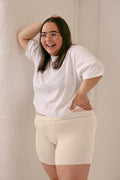
For the layer against your skin, if you want a boxer short rather than a cotton knicker, our pick is Flissie women's bamboo boxer shorts (we make them): a 6 or 9 inch leg, in UK 8 to 30 at the same price in every size, with a 60 day comfort guarantee. They are bamboo viscose, not the cotton or silk the NHS names, and the NHS, the PCDS and the BAD do not mention bamboo viscose, so where a clinician advises cotton, cotton wins.
Other options, by need: loose cotton or silk clothing, as the NHS names; cotton underwear for thrush and cotton or silk for lichen sclerosus; and a GP for anything severe, all over your body or new.
Flissie women's bamboo boxer shorts
£13.50 a pair in UK 8 to 30, the same price in every size, or less per pair in a pack: 6 for £75 (£12.50 each) or 10 for £115 (£11.50 each). 95% bamboo viscose and 5% elastane, with a 6 or 9 inch leg. Free UK delivery on every order and a 60 day comfort guarantee: if the size is not right on your first order, we post your new size free.
Why does menopause cause itchy skin?
The NHS lists itchy skin as a symptom but does not say why. The clearest explanation from a UK menopause body is about the skin of the vulva and vagina: Women's Health Concern says that “Without the production of estrogen by the ovaries, the skin and supporting tissues of the vulva (‘lips’) and vagina become thin and less elastic.”
Can perimenopause cause itchy skin, or only the menopause itself? Both: the NHS says “Symptoms can happen during perimenopause and menopause”, and that they “usually last for 7 to 9 years, sometimes longer, and during this time they can change.” On itchy skin after menopause, its itchy skin page says: “Itchy skin is also common after the menopause. It usually gets better over time.”
For skin elsewhere on the body, the sources point to dryness. The NHS says “Sometimes itching is caused by dry, cracked or irritated skin”, and the British Association of Dermatologists says widespread itch without a rash “is most commonly caused by dry skin”, adding: “This is true especially in people over 65 years of age.” None of the NHS, Women's Health Concern, PCDS or BAD pages we checked explains in more detail where the itchy skin menopause can bring comes from, so we will not guess.
Is it perimenopause, or something else?
Not every itch in your 40s or 50s is the itchy skin perimenopause brings. The NHS lists other causes: skin reactions to heat or to something you are allergic to (such as hives or heat rash), long-term skin conditions such as eczema and psoriasis, fungal infections such as thrush and ringworm, and parasites such as scabies. The PCDS notes that “pruritus is more common in older people” (pruritus is the medical word for itch), and the BAD says: “Sometimes a cause for the itch cannot be found.”
If you take HRT, the NHS lists “mild rash or itching” among the side effects of oestrogen and “mild rash or itchy skin” among those of progestogen, and says to speak to a GP if “you have severe side effects or they continue for longer than 3 months”.
That is why the GP signs further down matter more than anything we sell. If you are not sure you are in perimenopause at all, our perimenopause symptoms checklist covers the other symptoms.
What helps itchy skin in menopause: the NHS advice, word for word
The NHS advice is skin care and clothing, and its itchy skin page covers the itchy skin menopause can bring as well as other causes. Its self-care lists:
The NHS says do:
- pat or tap your skin instead of scratching it
- hold something cool on your skin, like a damp towel
- have cool or lukewarm baths or showers
- use an unperfumed moisturiser or emollient regularly
- keep your nails clean, short and smooth
- wear loose cotton or silk clothing
- use a laundry liquid or powder that's for sensitive skin
And do not:
- do not wear tight clothes, or clothes made from wool or synthetic fabrics
- do not spend a long time in the bath or shower
It also says not to use perfumed soaps or moisturisers.
The PCDS and the BAD add detail, in their own words:
- Water: “Make sure baths and showers are lukewarm” and “Do not wash (bath or shower) more than once a day” (PCDS); “Bathe or shower quickly in lukewarm (not too hot) water no more than once daily” (BAD).
- Soap: “Avoid soap or anything else that makes a lather, even if it claims to be good for skin” (PCDS).
- Moisturiser: “The drier your skin, the more frequently you should apply a moisturiser”, and “The simpler the formula, the better (aim to avoid fragrances or perfumes and opt for the least number of preservatives)” (BAD). “A cooled emollient (moisturiser) kept in the refrigerator may also help” (BAD).
A pharmacist can help. The NHS says “A pharmacist can tell you what the best products are for itchy skin”, and that they “can also recommend lotions and creams, such as menthol creams that help by cooling the skin.”
When to see a GP about itchy skin and menopause
See a GP if itchy skin is severe, is all over your body, does not get better with self care or keeps coming back, or comes with a new rash, lump or swelling you are worried about. The NHS says to see a GP if itchy skin:
- is affecting your daily life
- does not get better with self care or keeps coming back
- is caused by a new rash, lump or swelling that you're worried about
- is all over your body
- is severe
- happens during pregnancy
The PCDS adds a time limit and a warning: “If the pruritus goes on for more than 6 weeks you must make an appointment to see a health professional”. And: “If the pruritus is associated with night sweats and/or weight loss, then you must arrange an urgent appointment”, “as this may suggest a more serious cause.” Night sweats are also common in perimenopause, as Women's Health Concern's list of common symptoms shows, so do not assume the menopause explains both: if itching comes with night sweats and/or weight loss, arrange an urgent appointment, as the PCDS says.
At the appointment, the NHS says a GP “might arrange a blood test, which may help find the cause of your itchy skin”, and may refer you to a dermatologist.
Itching in and around the vagina: see a GP first
Itching in and around the vagina is a recognised menopause symptom, but it has more than one cause, so see a GP rather than guessing. The NHS says: “You may get symptoms such as dryness, a burning feeling, irritation or itching in and around the vagina.” Its pages on three conditions all list itching there, and each needs something different:
- Vaginal dryness. The NHS lists feeling “sore or itchy in and around your vagina” as a symptom and the menopause as a cause. Women's Health Concern says “lack of estrogen can cause vaginal dryness, itching/irritation and pain during sexual intercourse”, and its urogenital factsheet says vulval and vaginal dryness, soreness, burning, irritation, itching and chafing “are likely to respond to local estrogen therapy”. That is a GP conversation: Women's Health Concern's advice is to “talk to your doctor, who can recommend a treatment to suit you.”
- Thrush. The NHS lists “itching and irritation around the vulva and vagina”, and says to see a GP if “you have symptoms of thrush for the first time”, if “thrush keeps coming back (more than 4 times in 12 months)”, or if you have thrush and are over 60.
- Lichen sclerosus. “Lichen sclerosus is a skin condition that causes itchy white patches, most commonly on the genitals”, the NHS says, and “it's much more common in women over 50.” See a GP if you have “an itchy white patch on your genitals or skin”.
Do not self-treat on a guess. Writing about vaginal dryness, Women's Health Concern says: “Some women who wrongly assume this to be an attack of thrush buy over-the-counter remedies, which can make the problem much worse.” The NHS says to see a GP if vaginal dryness is affecting your daily life, or if you have had it “for a few weeks and things you've tried yourself are not working”.
On clothing, the NHS is specific: “wear cotton underwear” for thrush, and “wear cotton or silk underwear” for lichen sclerosus, where it also warns that “Rubbing or damage to the skin can trigger lichen sclerosus or make it worse.” Women's Health Concern adds: “If the vulval lips are thin and dry, rubbing against underwear can cause soreness.” Our boxers are bamboo viscose, not cotton or silk, so follow the NHS: our guide to cotton underwear for women covers what to look for, and when cotton wins.
What to wear with itchy skin
Loose cotton or silk, says the NHS, and not tight clothes, wool or synthetic fabrics. Every clinical source we checked that names a fabric names cotton. Here is their clothing advice, word for word:
- NHS: “wear loose cotton or silk clothing” and “do not wear tight clothes, or clothes made from wool or synthetic fabrics”.
- PCDS: to avoid overheating, “wear appropriate cool, breathable clothing (e.g. cotton)”.
- BAD: “Opt for non-synthetic, breathable clothes (such as cotton).”
For itchy skin during menopause, the advice is the same as for any other itch: the NHS page covers both.
Why seams, labels, lace and tight synthetics bother irritated skin
Heat, sweat and rough details. The National Eczema Society writes for people with eczema, not about the menopause, but its clothing factsheet is the most detailed UK guidance we found on how fabric details affect irritated skin:
- “Many people with eczema find that wool and synthetic materials, such as polyester and nylon, cause overheating, sweating and irritation, which set off itch.”
- “Rough seams, scratchy labels, dyes and fastenings (e.g. zips, buttons and poppers) can also cause problems for sensitive skin.”
- “Other materials and embellishments that can irritate skin include leather, lace, sequins, fake fur, tulle, velvet and denim.”
A tight synthetic knicker with a lace trim and a scratchy label collects most of that list in one garment, and the NHS says not to wear tight clothes against itchy skin at all.
The catch: underwear cannot be loose
The NHS says loose, and knickers sit against your skin by design. So read the advice as two layers: a loose outer layer, such as a skirt, a dress or wide-leg trousers, and a layer against your skin that is not tight. A close fit is not the same as a tight one, and a pair that digs in at the waist or the leg is probably the wrong size.
Which fabric is best for itchy skin?
Cotton, on clinical advice, with silk as the NHS's other named fabric. None of the NHS, the PCDS or the BAD mentions bamboo viscose.
| Fabric | What the NHS, PCDS and BAD say | Where it fits |
|---|---|---|
| Cotton | NHS: “wear loose cotton or silk clothing”; cotton underwear for thrush; cotton or silk underwear for lichen sclerosus. PCDS and BAD: cotton is their example of breathable clothing | The clinical default. Check the label: the National Eczema Society warns “‘Cotton rich’ blends can contain a significant proportion of polyester” |
| Silk | NHS: named with cotton for itchy skin, and for underwear with lichen sclerosus | The NHS's other named fabric |
| Bamboo viscose (what Flissie boxers are made of) | Not mentioned. A man-made cellulose fibre, not the cotton or silk the NHS names. Our fabric also has 5% elastane, which is synthetic | A long-leg boxer, if you want one. Not a replacement for cotton where a clinician advises cotton |
| Polyester and nylon | Synthetic fabrics: the NHS says do not wear them against itchy skin, and the BAD says opt for non-synthetic | Avoid against itchy skin |
| Wool | NHS: do not wear clothes made from wool | Avoid against itchy skin |
Itchy skin at night: what to wear to bed
Keep cool. The PCDS and the BAD both say: “Keep your bedroom cool and do not sleep with heavy or heat retaining bedclothes”, and the BAD adds: “If you feel hot and itchy a fan can help to cool the skin down.”
For what you wear in bed, the daytime advice still applies: loose cotton or silk on NHS advice, nothing tight, and no scratchy labels or rough seams against irritated skin. If you sleep in shorts, our guide to sleep shorts for women compares six UK options, and our menopause nightwear guide compares eight. For night sweats and what you wear underneath, see perimenopause, hot flushes and your underwear.
One night-time pattern needs a GP quickly. The PCDS says: “If the pruritus is associated with night sweats and/or weight loss, then you must arrange an urgent appointment”. None of the NHS, PCDS or BAD pages we checked lists itching at night on its own as a reason to see a GP, but if it is keeping you awake, take the NHS reason “is affecting your daily life” seriously.
Flissie women's bamboo boxer shorts: our pick if you want a boxer
Best for: a long-leg boxer in UK 8 to 30, at the same price in every size. Not for: thrush or lichen sclerosus, where the NHS says cotton underwear (or silk, for lichen sclerosus), or anyone a GP or pharmacist has told to wear cotton.

We are Phillippa and Matthew, and we run Flissie from Derbyshire, so read this section knowing it is about our own product. Here is how they are made, as specifications:
- Construction: smooth seams and no tag; seamless at the back and sides, with a flat seam at the front.
- Fabric: 95% bamboo viscose and 5% elastane, dyed to OEKO-TEX Standard 100, which means the finished fabric is tested for harmful substances. That is a test of the fabric, not a certificate for the whole garment, and not a test of how your skin will react. Bamboo viscose is a man-made cellulose fibre, and the elastane is synthetic.
- Waistband: a mid-high, wide, flat waistband rather than a narrow band of elastic.
- Leg: 6 inch, which sits mid-thigh (every colour and size), or 9 inch, which sits just above the knee (black and pine green, in every size from UK 8 to 30). Most women's boxer shorts stop at 2 to 4 inches.
- Sizes: S to 3XL, UK 8 to 30, the same price in every size, with the leg opening and waistband graded separately rather than scaled up.
- Price: £13.50 a pair, 6 for £75 (£12.50 each) or 10 for £115 (£11.50 each). Free UK delivery on every order.
- Care: a cool wash at 30 degrees or below, no fabric softener, and air dry.
Why it is our pick if you want a boxer: a 6 or 9 inch leg where most women's boxer shorts stop at 2 to 4 inches, the same price in every size from UK 8 to 30, and a 60 day comfort guarantee: if the size is not right on your first order, we post your new size free.
What customers say about the seams and the fabric, in their own words:
“I liked the fact that the seams are in a different place to normal pants.”
Louise, United Kingdom, on Flissie women's bamboo boxer shorts
“Soft and comfortable, especially like that they are smooth so dresses and skirts don't catch on them as you walk”
Anne, United Kingdom, on Flissie women's bamboo boxer shorts
Each review is one customer's experience, not a promise.
The trade-offs, so you can decide:
- Not cotton or silk. Those are the fabrics the NHS names for itchy skin, so where a clinician advises cotton, cotton wins.
- Close-fitting, not loose. Like all underwear, they sit against your skin, so keep the outer layer loose. The leg should sit flat on your thigh, not loose or tight.
- A flat seam and some elastic. There is a flat seam at the front, 5% elastane in the fabric and elastic in the waistband.
- The leg hem can roll on some bodies. For most reviewers the seat stays put, but the leg can roll a little, especially under tight trousers or leggings. The fix is the right size or the 9 inch leg.
One reviewer on the waistband:
“Very smooth fabric. The waistband is quite wide so can show through other clothes.”
Norma, United Kingdom, on Flissie women's bamboo boxer shorts
Shop Flissie women's bamboo boxer shorts
Where we are not the answer
- Itching that is severe, all over your body or comes with a new rash. That needs a GP, who may arrange a blood test or refer you to a dermatologist.
- Itching in and around the vagina. See a GP. It may be vaginal dryness, thrush or lichen sclerosus. Women's Health Concern says vulval and vaginal symptoms of the menopause, itching included, are likely to respond to local oestrogen treatment, and the NHS says cotton underwear for thrush and cotton or silk underwear for lichen sclerosus. Follow the NHS; our cotton underwear guide covers what to look for.
- If cotton already suits you. The NHS names cotton or silk for itchy skin. If loose cotton knickers suit your skin, there is no reason to switch.
What we will not tell you
Itchy skin attracts a lot of promises. These are the ones we will not make, and why.
- We will not tell you our boxers stop the itch, calm irritated skin or suit sensitive skin. We have no evidence for any of that.
- We will not tell you bamboo viscose is better for itchy skin than cotton. Where the NHS names a fabric for itchy skin, it names cotton or silk.
- We will not tell you OEKO-TEX Standard 100 makes them right for your skin. It is a test of the finished fabric for harmful substances, not of how your skin will react, and not a certificate for the whole garment.
- We will not call our fabric natural. Bamboo viscose is made from plant cellulose by a process the National Eczema Society calls “chemically intensive”, and the 5% elastane is synthetic.
- We will not tell you the NHS recommends our underwear. The NHS, the PCDS, the BAD and Women's Health Concern recommend no brand, and none of them mentions bamboo viscose.
- We make a perimenopause supplement, and we will not suggest it for itchy skin.
Perimenopause itchy skin: common questions
How do you stop menopause itching?
Start with the NHS self-care advice: cool or lukewarm baths or showers, an unperfumed moisturiser or emollient used regularly, patting rather than scratching, and loose cotton or silk clothing. A pharmacist can suggest products, such as menthol creams that cool the skin. If the itching does not get better with self care or keeps coming back, the NHS says to see a GP.
Why have I suddenly started itching all over?
See a GP. The NHS says to see a GP if itchy skin is all over your body, and itching all over has many possible causes, which no website can sort out for you. The PCDS says: “If the pruritus is associated with night sweats and/or weight loss, then you must arrange an urgent appointment”. A GP may arrange a blood test to help find the cause.
What does perimenopause itching feel like?
Like any itch: the British Association of Dermatologists defines itch as a sensation of the skin which causes a desire to scratch. The NHS describes dry and itchy skin, and in and around the vagina it lists dryness, a burning feeling, irritation or itching. An itchy white patch, especially on the genitals, is a reason to see a GP, the NHS says.
What vitamins are good for menopause itching?
None of the NHS, PCDS or BAD pages on itchy skin that we checked recommends a vitamin or supplement: their advice is moisturisers, lukewarm water and breathable clothing such as cotton. If you see supplements for menopause itchy skin advertised, guidance from the Committee of Advertising Practice says “claims to treat or help the symptoms of the menopause (and perimenopause) are unlikely to be acceptable for foods and food supplements.” If itching is affecting your daily life, see a GP.
Can menopause cause itchy skin?
Yes. The NHS lists skin changes, including dry and itchy skin, among the symptoms of menopause and perimenopause, and says itchy skin is common after the menopause and usually gets better over time. Itching has other causes too, from eczema to fungal infections, so see a GP if it is severe, all over your body, or keeps coming back.
Is itchy skin a sign of menopause?
It can be one, but on its own it tells you little: the NHS says one of the first signs of perimenopause is usually a change to your periods, and itchy skin has many other causes, from dry skin and allergies to eczema and fungal infections. If you think you have symptoms of perimenopause and want to know your options, the NHS says to contact a GP.
Is itchy skin at night menopause-related?
It can be, but none of the NHS, PCDS or BAD pages we checked singles out night-time itching in the menopause. The PCDS says: “If the pruritus is associated with night sweats and/or weight loss, then you must arrange an urgent appointment”. Night sweats are also common in the menopause, so do not assume that is the cause: if you have both, arrange an urgent appointment, as the PCDS says.
What is the best cream for menopause itchy skin?
There is no single best one, and we do not sell creams, so ask a pharmacist. The NHS says to use an unperfumed moisturiser or emollient regularly, and the BAD says the simpler the formula, the better, avoiding fragrances or perfumes and with as few preservatives as possible. The NHS adds that a pharmacist can recommend menthol creams that help by cooling the skin.
Can menopause cause vaginal itching?
Yes. The NHS lists dryness, a burning feeling, irritation or itching in and around the vagina among menopause symptoms, and Women's Health Concern explains that without oestrogen the skin of the vulva and vagina becomes thin and less elastic. Itching there can also be thrush or lichen sclerosus, so see a GP rather than guessing.
How much are Flissie boxer shorts?
Flissie women's bamboo boxer shorts (we make them) are £13.50 a pair. Packs are 4 for £54, 6 for £75 (£12.50 each) or 10 for £115 (£11.50 each). Every size from UK 8 to 30 is the same price, UK delivery is free on every order, and there is a 60 day comfort guarantee. Not comfortable? We post your new size free.
What size Flissie boxer shorts should I get?
Take your normal UK size. Between L and XL? Take the L. At XL and above, if you are between two sizes, take the smaller one. Flissie women's bamboo boxer shorts (we make them) run from S to 3XL, UK 8 to 30, and the leg should sit flat on your thigh, not loose or tight. If the size is wrong on your first order, we post your new size free (try one pair first).
Not sure about the size?
Flissie women's bamboo boxer shorts run from S to 3XL (UK 8 to 30), all at the same price. Between L and XL? Take the L. At XL and above, if you are between two sizes, take the smaller one. Every UK order has free delivery and our 60 day comfort guarantee: try one pair first, and if the size is not right on your first order, we post your new size free.
Sources
- NHS, with each page's last review date: Itchy skin (19 July 2023), Symptoms of menopause and perimenopause (19 May 2026), Vaginal dryness (24 July 2025), Lichen sclerosus (9 December 2024), Thrush in men and women (28 July 2023) and Side effects of HRT (3 January 2023)
- Primary Care Dermatology Society: Itch (pruritus) without a rash, patient leaflet (31 January 2025)
- British Association of Dermatologists: Pruritus patient information leaflet (December 2025)
- Women's Health Concern, the patient arm of the British Menopause Society: Urogenital problems, Vaginal dryness and Perimenopause and menopause: your questions answered factsheets
- National Eczema Society: Clothing and eczema factsheet (November 2023)
- Committee of Advertising Practice: Healthcare: the menopause (7 August 2026)
- Flissie product details from our own product record, and customer reviews quoted word for word from the 336 published on our website
Checked on 21 October 2026, and the NHS side effects of HRT page on 22 October 2026.