Underwear is the first thing you put on and the last thing anyone sees, which is exactly why it matters. For a lot of non-binary people, finding underwear that fits without forcing a choice between comfort and identity is the difference between getting dressed and getting through the day.
The category has grown considerably. Inclusive sizing, adaptive closures and fabrics chosen for comfort rather than for what a catalogue thinks you should want are all now widely available.
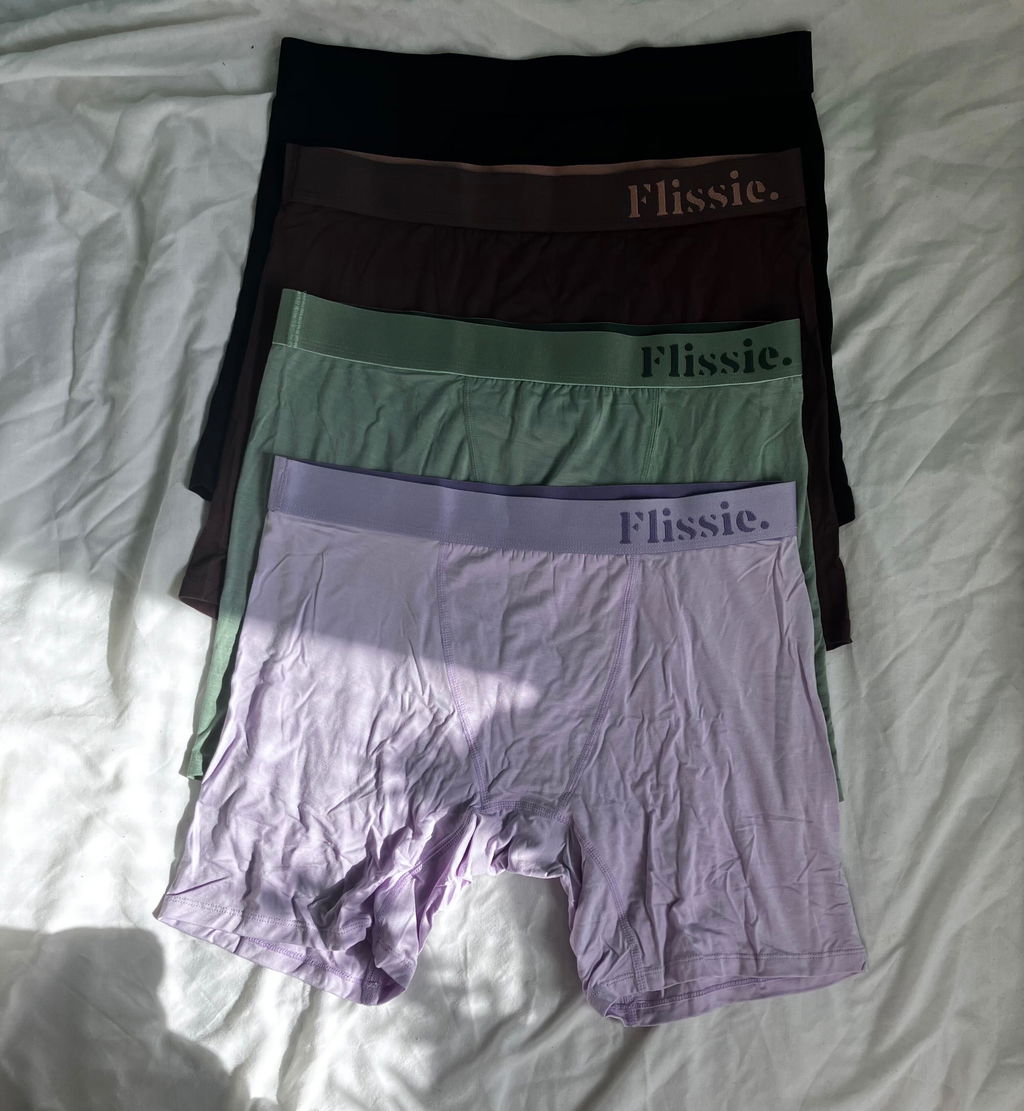
Quick answer: non-binary underwear is underwear designed around fit and comfort rather than a gendered look; boxer briefs and boxer shorts are popular, alongside packing, tucking and period styles. Measure your hips as well as your waist, check each brand's own measurements rather than the size label, and look for breathable fabric with OEKO-TEX Standard 100 on the label. If a longer-leg boxer suits you, Flissie women's bamboo boxer shorts (we make them) are bamboo viscose, with a 6 inch leg and a wide flat waistband, in UK 8 to 30, every size the same price. The name says women's because that is how most people search for them.
Understanding non-binary underwear
Non-binary underwear breaks away from traditional gender-specific designs. These garments focus on comfort and functionality rather than a stereotypical look, and the good ones welcome all body types through thoughtful features rather than marketing.
What makes underwear non-binary
Mostly, it is versatility and fit. Designers use stretchable fabrics and elastic components that adjust to different body shapes. Many brands use modal, a cellulose fibre made from beech, for its softness and give.
Common features include:
- Magnetic clasps and easy closures that help with accessibility
- Breathable, skin-friendly materials
- Cuts that work across a range of body types
- Clean designs without gender-coded detailing
Styles available
Boxer briefs and boxer shorts are a popular choice, with a longer leg that stops chafing and gives balanced coverage. Bikini styles keep things minimal, while high-waisted options give full coverage.
More specific designs include:
- Packing-compatible compression shorts
- Tucking underwear in various cuts
- Period underwear in non-gendered styles
Size ranges have widened considerably, with some brands running XS to 6X. Side-fastening and front-closing designs also help people with mobility needs, which is a reminder that inclusive design goes well beyond gender.
Why it matters beyond comfort
Finding something that fits
A lot of people describe finding underwear that suits them as a genuine shift. One common account is wearing boxer shorts under a dress as a way of meeting a formal dress code without feeling like you are in costume. Another is simply not having to think about it.
Confidence
Underwear that fits properly helps with body confidence, and for people managing gender dysphoria it can matter a great deal. Not having to choose between fit and feeling like yourself makes it easier to be present rather than distracted.
Community
Certain brands function as a quiet signal of safety and understanding, in the same way certain shops or clothing labels do. That shared recognition has created spaces where people talk openly about body image and fit, which is not something the underwear industry has historically been good at.
It reaches into working life too. Being able to get dressed for work without feeling misrepresented by your own clothes is not a small thing.
Shopping for non-binary underwear
Sizing
Most underwear sizing looks only at the waist. For a lot of people that is the wrong measurement.
Measure your hips as well as your waist, and check the brand's actual measurements rather than trusting the size label. Sizing varies enormously between brands.
A few practical things:
- Measure in centimetres and do not round
- If you are between sizes, take the larger one, particularly for anything active
- Many cuts assume roughly a 10 inch difference between waist and hip. If yours is different, check the leg opening measurement too
Fabric
Fabric affects comfort, durability and whether you actually reach for a pair. Breathable materials are usually the safest bet.
- Organic cotton. Breathable, comfortable, cheap and forgiving in the wash. Look for GOTS certification
- Bamboo viscose. Soft from the first wear, breathable and temperature-regulating. Needs a cool wash and no fabric softener
- Tencel and modal. Similar to bamboo viscose
- Microfibre. Dries fastest, which is why it dominates sportswear
Whatever the fibre, look for OEKO-TEX Standard 100 on the label. It means the finished fabric has been tested for harmful substances, which is more useful than any claim about the raw material. Most brands blend 5 to 7% elastane into natural fibres for stretch and recovery.
Where the industry is going
Changing standards
Underwear has been rigidly gendered for a long time. Brands like TomboyX changed that by making boxer-style underwear designed for women and non-binary people, and mainstream labels have followed. Cosabella's For People collection is one example among many.
Inclusive design
Better design means designing without assuming who will wear it. That extends past gender: adaptive features like side fastenings and easy closures matter enormously to disabled shoppers, who are consistently underserved by mainstream clothing.
The commercial logic
There is a practical reason mainstream brands have moved, beyond values. Gender-neutral ranges can consolidate product lines, which simplifies inventory and reduces waste. Doing the right thing and running a leaner range happen to point the same direction here.
Where we fit
We make Flissie women's bamboo boxer shorts: bamboo viscose, with a 6 or 9 inch leg, in UK sizes 8 to 30, every size the same price. They are sold as women's boxers because that is how most people search for them, but plenty of our customers are not women, and the cut does not care.
Soft from the first wear, wide flat waistband, smooth seams, no tag, dyed to OEKO-TEX Standard 100. If the size is wrong, the swap on your whole first order is free.
Questions
What is the best non-binary underwear?
The pair that fits your body without forcing a choice between comfort and identity, so start with the cut and the measurements rather than the label. Boxer briefs and boxer shorts are popular for their longer leg and balanced coverage. Flissie women's bamboo boxer shorts (we make them) are one option if you want a longer leg: a 6 inch leg, no tag and a wide flat waistband, in UK 8 to 30 at one price.
How do I find my size in non-binary underwear?
Measure your hips as well as your waist, in centimetres and without rounding, and check each brand's own measurements rather than the size label. If you are between sizes, take the larger one. Flissie women's bamboo boxer shorts (we make them) run from S (UK 8 to 10) to 3XL (UK 28 to 30), and the size swap on your whole first order is free.