Underwear's roots can be traced to ancient Egypt, though its most important developments came during the Roman Era. Women started wearing tight bands below their breasts during this time. These simple functional pieces turned into complex fashion statements over the centuries and shaped both society and culture.
When was underwear invented?
The earliest known underwear is roughly 7,000 years old. Archaeologists have found loincloths made from leather and strips of material dating back that far, which makes underwear one of the oldest garment types we know of.
The oldest surviving examples come from ancient Egypt, where linen loincloths called schenti were worn from around 3,000 BC. King Tutankhamun was buried with 145 of them, which tells you how much they mattered.
Who invented underwear?
No single person invented underwear. It appears independently across ancient civilisations, which is what you would expect of something so basic. But two names matter for the modern version.
French inventor Paul Dubois patented the striated elastic band in 1908, which is what made a comfortable waistband possible. Before that, underwear was tied or buttoned.
And in 1914, Caresse Crosby patented the modern bra, made from two handkerchiefs and a ribbon. Her design replaced the corset and changed intimate apparel permanently.
The Early Days of Underwear
The loincloth represents our first type of underwear, with archeologists finding evidence from 7,000 years ago. People made these simple garments from leather and strips of material, which started our long relationship with intimate clothing.
Ancient beginnings
Ancient Egyptians took the simple loincloth design to new heights by creating triangular linen pieces with attached strings, called schenti. These pieces meant so much that King Tutankhamun's tomb contained 145 of them. Romans had more sophisticated undergarments for both men and women. Women wore soft leather strophiae (breastcloths) and subligacula, which were shorts or loincloths. They used these clothes especially when doing athletic activities.
Medieval undergarments
The Middle Ages brought big changes to undergarments. Men stopped wearing simple loincloths and switched to looser, trouser-like clothes called braies. These practical garments became a key part of medieval wardrobes. People stepped into them and tied them around their waist and legs at mid-calf.
Medieval women had fewer undergarment choices. Men wore their braies, but women used undergarments mostly during menstruation with simple pads. On top of that, everyone wore the chemise, a close-fitting shirt that protected their body from outer clothes.
Renaissance innovations
The Renaissance brought amazing changes to underwear design. Braies became shorter because people wore longer styles of chausses, form-fitting hose that covered their legs. This period gave us the first true unisex garments: shirts and long underpants that worked for both men and women.
The codpiece stands out as one of this era's unique creations. People first made it as a practical fix for men wearing very short doublets, but it turned into a fashion statement. Henry VIII's reign saw the codpiece reach new heights, padded and decorated to show status.
Women's undergarments changed a lot too. The Renaissance brought more structured designs. Noble women preferred silk and linen, while most people chose linen for its practical benefits. China saw the creation of the dudou, a close-fitting bra that flattened the breasts to match their beauty standards.
Victorian Era Transformation
The Victorian era transformed the history of underwear with complex layers and strict social codes shaping intimate apparel. Victorian women's daily attire included up to 13 pieces of underwear that weighed between 7 and 10 pounds.
The rise of the corset
The corset became the life-blood of Victorian undergarments and changed women's silhouettes dramatically. Joseph Cooper created a breakthrough design in 1848 with a front-fastening busk that helped women dress without assistance. Corsets typically measured between 20 and 22 inches, though final sizes changed based on individual priorities.
Skilled craftsmen made these garments from durable cotton and added whalebone strips for support. Metal eyelets appeared in the 1820s and allowed tighter lacing. Edwin Izod's steam molding technique in the late 1860s created stiffer, more rounded corsets.
Research shows that extreme tight-lacing wasn't as common as people think. Victorian women's corseted waists measured around 22 inches rather than the legendary 16-inch waist. Maternity corsets became available to more people as time passed, featuring special designs like openings at the bust.
Class differences in underwear
Social status shaped Victorian underwear choices significantly. Upper-class women displayed their wealth through ornately decorated corsets with silk brocade and gold trimmings. These women could afford multiple daily changes of their chemise, a simple undergarment.
Working-class women showed remarkable creativity despite their circumstances. They made their own corsets using instructions from dress-making texts published in the 1830s and 1840s. Many chose unboned or lightly boned stays instead of fully structured corsets to move more easily during work.
Clear differences existed beyond corsets. Middle-class women wore undergarments similar in style to upper-class varieties but with less elaborate decorations. They managed to keep the essential Victorian layers: chemise, drawers, corset, stockings, camisole, and multiple petticoats.
Technology made underwear fashion available to more people as time passed. Sewing machines helped manufacturers produce various corset styles at better prices. Women who couldn't afford domestic workers gained access to corsetry through center-front fastening split busks.
Undergarment design changed significantly during the Victorian period. Corsets lost their shoulder straps in the 1850s, and loop and stud front fastenings became common. Corsets of the 1870s and 1880s created more pronounced hourglass shapes by using additional whalebone strips.
These undergarments ended up representing much more than clothing. They mirrored Victorian society's complex hierarchy and technical progress. The era's breakthroughs in underwear design and manufacturing set the foundation for today's more comfortable, widely available intimate apparel.
How World Wars Changed Underwear
World Wars I and II altered the map of underwear manufacturing. These global conflicts led to breakthroughs that continue to influence intimate apparel today.
Material shortages and adaptations
The lack of resources led to major changes in underwear production. Raw materials for civilian clothing became hard to find. Prices surged and traditional materials like silk disappeared from the market. British intelligence broke down German soldiers' underwear by collecting samples from casualties. They wanted to learn about their superior moisture-wicking capabilities.
The British government created 'Utility fabrics' to ensure quality and value during shortages. Women's knickers remained one of the few garments that could use elastic, which had become rare.
The British Board of Trade worked with leading fashion designers to maintain production standards. They created attractive Utility clothing ranges. The Incorporated Society of London Fashion Designers emerged in 1942. This group set design standards and boosted exports.
Women's changing roles
Women's undergarments transformed as their roles in society grew. Women started wearing knickers in 1916 when they took on physical work in factories, mines, and farms. The American war effort brought in nine million women who received money specifically for undergarments.
U.S. War Industries Board chairman Bernard Baruch asked women to stop buying corsets in 1917. This patriotic act freed up about 28,000 tons of metal, enough to build two battleships. Women couldn't wear traditional restrictive undergarments while working in ammunition factories. These garments made it impossible to do their jobs.
New fabric technologies
Breakthroughs after the war revolutionised underwear manufacturing. Latex yarn arrived in 1930, making stretch garments that fit better. Nylon's creation in 1938 brought lightweight, easy-care underwear options.
Men started wearing shorter, crotch-length underpants after 1945. The most important change came in 1959 with Lycra. This elastomeric fibre combined with cotton or nylon offered better strength, stretch, and recovery.
The military's impact on underwear technology lasted well beyond the wars. These wartime breakthroughs became the foundations of modern underwear design, emphasising practicality, comfort and technical advancement.
The Comfort Revolution
The post-war era brought remarkable progress in underwear design. Comfort replaced restriction as the main priority, and this transformation marked a clear break from earlier decades' constraining garments.
Introduction of elastic
A remarkable transformation happened in the early 20th century with the arrival of elastic materials. French inventor Paul Dubois created and patented the 'striated elastic band' in 1908, which was used in corsets and girdles. American inventor Arthur F. Shattuck built on this success by developing elastic webbing from synthetic rubber in the 1920s.
Adding elastic bands to waistbands and suspenders changed everything. People could move freely for the first time. The American underwear company B.V.D. launched a sleeveless union suit with quarter-length legs in 1914. This athletic union suit came in lighter fabrics like cotton, silk, and poplin, showing a new focus on comfort.
Rise of synthetic materials
The 1930s launched a synthetic revolution in underwear manufacturing. British clothes manufacturer Sunspel created and patented Q14, a lightweight, breathable, woven mesh-like fabric in 1937. Rayon, developed in 1905, became a lighter option compared to traditional heavy fabrics.
Synthetic materials added unique benefits to underwear design:
- Polyester became the most common synthetic fibre. It resists heat and colour changes, dries quickly, and stretches better than cotton
- Polyamide stands out as one of the strongest textile fibres. It stays strong even when wet
- Mixing polyamide with elastane creates soft and stretchy undergarments
Today's synthetic materials excel at moisture-wicking capabilities. They pull sweat away from skin so it evaporates fast. These fabrics changed how underwear works, especially under tight clothes where they help avoid visible lines.
This comfort revolution raised environmental concerns. Synthetic fabrics like polyester and nylon need lots of energy to make and take a long time to break down, since they are petroleum-based. Manufacturers started looking at alternatives like organic cotton and recycled synthetic materials.
Lycra and new polyamide microfibres with moisture-wicking qualities made a big difference. Combined with seamless knitting technologies, they reduced sweat buildup and chafing. Athletes and everyday users benefited from these improvements.
Modern Underwear Innovation
Technology has revolutionised underwear design, combining comfort with innovative technology. These changes have redefined our understanding of intimate apparel.
Smart fabrics
Textile engineering has made significant strides with garments that adapt to individual needs. MIT researchers have developed smart textiles that monitor body movements through pressure sensors in multilayered knit fabrics. These fabrics use conductive yarn to create pressure sensors where the yarns intersect.
Smart shoes now come with 96 pressure sensing points that track movement patterns throughout the fabric surface. Modern smart fabrics do more than simple monitoring: they regulate temperature and control moisture.
Sustainable materials
Manufacturers have adopted lower-impact alternatives as environmental consciousness grows. Current sustainable underwear brands use materials such as:
- TENCEL Lyocell
- Recycled Nylon
- LENZING ECOVERO
- Organic Cotton
- Bamboo Viscose
These materials consider both environmental effects and personal health. Certifications like OEKO-TEX Standard 100, GOTS and Bluesign test finished fabric for harmful substances, which is a more useful thing to look for on a label than the word natural.
Customisation options
The digital era brings new possibilities for personalisation. Manufacturers create precisely fitted garments without extra seams using 3D knitting technology. This provides targeted support areas and maintains elasticity even after many washes.
AI algorithms analyse customer data to recommend personalised designs, sizes, and styles. VR and AR technology have changed how we shop, letting customers try on garments virtually through their smartphones.
Bespoke services now offer various customisation choices:
- Alternative colourways of existing collections
- Additional underwear styles, such as women's boxer shorts
- Size variations beyond standard ranges
- Pattern modifications
Independent designers work together with specialised manufacturers to create truly personalised pieces. This approach gives customers garments that fit their measurements and meet their specific support needs.
Conclusion
Underwear has come a long way from simple loincloths to high-tech garments. Ancient civilisations started with simple designs. The Victorian era brought new changes with corsets and social rules. World Wars pushed for practical changes that led to new materials and better manufacturing.
A comfort revolution created a major change in underwear design. New elastic materials and synthetic fabrics changed our view of intimate apparel. Smart fabrics and lower-impact materials show how far underwear design has progressed.
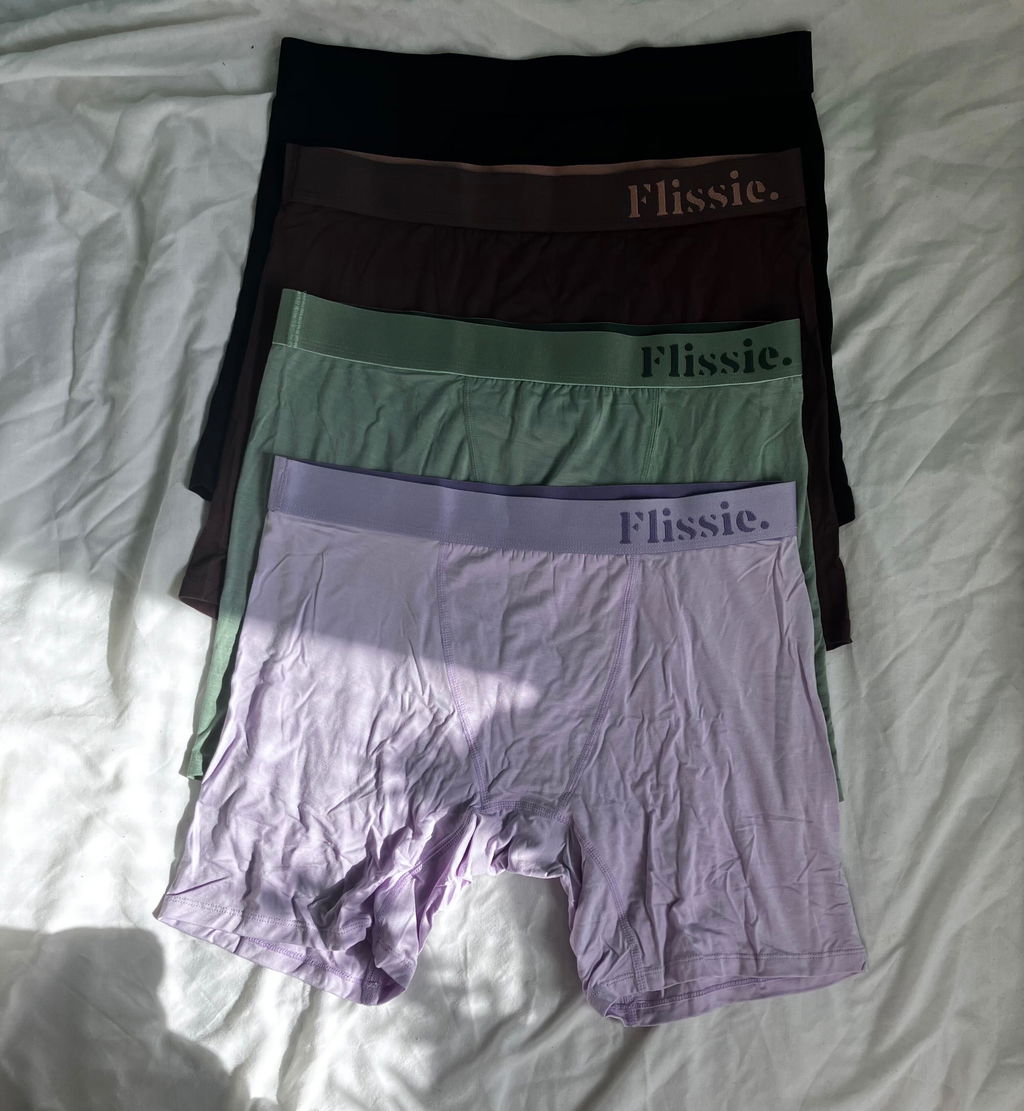
Modern designs focus on what each person needs. If you want to see where that has landed, we make bamboo boxer shorts with a 6 or 9 inch leg, in UK sizes 8 to 30.
FAQs
When was underwear invented?
The earliest known underwear is around 7,000 years old. Archaeologists have found loincloths made from leather and strips of material dating to that period, making underwear one of the oldest garment types we know of.
Who invented underwear?
Nobody in particular. Loincloths appear independently across ancient civilisations. For the modern version, Paul Dubois patented the elastic waistband in 1908 and Caresse Crosby patented the modern bra in 1914.
What did people wear before underwear?
Mostly nothing underneath. The loincloth was the first dedicated undergarment, and before that outer clothing sat directly against the skin. The chemise, a close-fitting linen shirt, became the standard barrier layer in medieval Europe.
How did underwear evolve from ancient times to the Victorian era?
Underwear started as simple loincloths and gradually became more complex. By the Victorian era it had transformed into elaborate, multi-layered garments, with corsets becoming a central piece for women. A Victorian woman might wear up to 13 pieces weighing 7 to 10 pounds.
What impact did the World Wars have on underwear design?
Material shortages and women's changing roles drove significant change. In 1917 the U.S. War Industries Board asked women to stop buying corsets, freeing around 28,000 tons of metal. Practical designs and elastic waistbands replaced restrictive garments.
When did women start wearing knickers?
Around 1916, when women took on physical work in factories, mines and farms during the First World War. Restrictive undergarments made that work impossible, so practical alternatives took over.